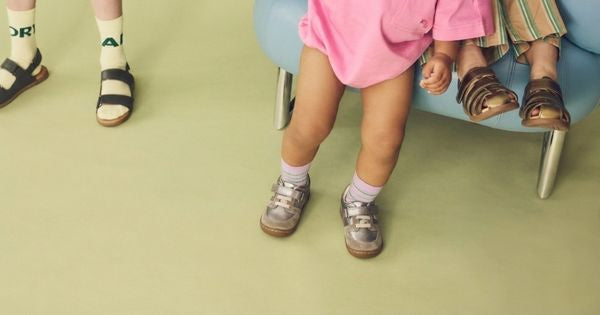
Signs Your Child Is Wearing the Wrong Shoe Size

The most common signs are red marks or blisters on your child’s feet, toes that look curled or press against the end of the shoe, your child often taking their shoes off, tripping more than usual, or shoes that leave marks on the skin. Since children rarely complain about the fit of their shoes, it’s usually up to you to notice when their shoes no longer fit.
Here’s what to watch for, why it’s more important than you might think, and how to keep up with your child’s fast-growing feet.
Why the wrong size is such a big deal
Children’s feet are still developing. Each foot has over 20 muscles and 26 bones, and in the early years, those bones are mostly soft cartilage that won’t fully form until about age 18. Because of this softness, wearing the wrong shoe size for months can push a growing foot out of its natural shape.
Young children often can’t feel or describe discomfort like adults do. They’ll keep running, jumping, and climbing even in shoes that are too small, and you might not hear anything about it. That’s why it’s so important to check their shoes regularly.
Signs the shoes are too small
Shoes that are too small are more common, since children’s feet grow faster than most parents realise. Look out for these signs:
· Red marks, ridges or indentations on the feet once the shoes come off
· Toes that are curled under or pressing right up against the end
· The big toenail looks bruised or sore
· Blisters or rubbed, red skin, especially at the heel or toes
· Your child is suddenly refusing to wear shoes that they were happy in last month
· A shoe that is visibly bulging or stretched out of shape
Press your thumb at the end of the shoe while your child is wearing it. If you don’t feel a gap beyond the longest toe, the shoe is probably too small.
Signs the shoes are too big
Shoes that are too big can cause just as many problems as shoes that are too small. Parents sometimes buy bigger sizes to make shoes last longer, but watch for these signs:
· Your child tripping, stumbling or looking clumsy on their feet
· The heel slips up and down with every step
· Toes gripping or clawing to keep the shoe on
· Shoes that slide off easily or feel loose even when fully fastened
· A general reluctance to run about as freely as usual
Shoes that are too loose make children work harder to keep them on. This can change the way they walk and cause rubbing or discomfort.
How often should you actually check?
Children’s feet grow faster than you might expect. Here’s a general guide:
· Toddlers and younger children may need a check every six to eight weeks
· Older children tend to slow down a little, so every three to four months works well
· Always recheck at the start of a new season or before buying school shoes
Feet swell a bit during the day, so it’s best to measure them in the afternoon or evening when they’re at their largest.
How to check the size properly at home
You don’t need any special skills—just a few minutes. Measure both feet, since they’re often slightly different sizes, and fit the shoes to the larger foot. Check for these three things:
· Length: roughly a thumb's width of space, about 1 to 1.5 centimetres, beyond the longest toe
· Width: snug across the ball of the foot without squeezing or leaving marks
· Heel: held firmly in place with no slipping when they walk
Shoes with secure, adjustable fastenings make it much easier to get the right fit. You can adjust them to your child’s foot, instead of hoping a slip-on will stay in place.
What to look for in a well-designed children’s shoe
Once you know the right size to look for, it helps to understand what makes a shoe worth buying in the first place. Not all children’s shoes are made with foot health in mind. Here’s what actually matters:
· Podiatrist-approved design. A shoe developed with a paediatric podiatrist will be shaped to support natural foot development — with the right toe box width, appropriate sole flexibility, and a secure heel counter.
· Adjustable fastenings. Velcro or buckle straps that fully adjust let you fit the shoe to the actual shape of your child’s foot, not the other way around. This matters especially if your child has a narrow or wider-than-average foot.
· Built-in growing room. Some shoes are engineered with a removable midsole that extends the fit by up to half a size as your child grows, meaning you get more wear without compromising comfort or support. This can make a real difference over the course of a season.
· Flexible, grippy soles. Soles should bend easily at the ball of the foot, not be completely rigid. A non-slip outsole also reduces the risk of slipping on smooth indoor or outdoor surfaces.
· Breathable materials. Children’s feet sweat more than adults’ do. Lightweight, breathable uppers help keep feet dry and reduce the chance of rubbing, blisters, and odour.
What to do when shoes no longer fit
Once you’ve confirmed that a pair no longer fits, the question becomes what to do with it. Outgrown shoes that are still in good condition are worth passing on rather than throwing away — children’s footwear represents a significant amount of waste when it ends up in landfill, and good-quality shoes often have plenty of life left in them after your child has grown out of them.
Some options to consider:
· Trade them in. ZIG+STAR runs a trade-in programme that lets you return outgrown pairs in exchange for money off your next purchase. It’s a straightforward way to offset the cost of the next pair while keeping good shoes in circulation rather than sending them to landfill.
· Pass them to a sibling. If you have more than one child, ZIG+STAR offers a sibling discount (use code SIBLING20 at checkout) so that buying the next pair for a younger child costs a little less. Because ZIG+STAR shoes are built to last, they’re genuinely made to be handed down.
· Donate or rehome. Local nearly new sales, charity shops, and parent Facebook groups are all good options for passing on outgrown shoes that are still in good condition.
The ZIG+STAR approach to a longer-lasting fit
At ZIG+STAR, we design our shoes to make things easier for you, because we know how quickly children’s feet grow. Each pair is developed with a paediatric podiatrist and made with room to grow, fully adjustable uppers, and the right width for growing feet. Flexible, non-slip soles let feet move naturally, and lightweight, breathable materials keep them comfortable from the first wear to the last.
Our Good-to-Grow removable midsole extends fit by up to half a size as your child grows, so you get more wear from every pair. When it’s time for the next size, our trade-in programme means your outgrown shoes don’t have to go to waste. Our Foot Measurer removes the guesswork, and our SizeWise foot scanner lets you measure your child’s feet at home in seconds using your phone — so you always know when it’s time to move up a size, without a trip to the shops.
FAQs
How do I know if my child's shoes are too small? Take the shoes off and look at the feet. Red marks, ridges, curled toes or sore toenails are clear signs, as is your child no longer wanting to wear shoes they previously liked. If you press the end of the shoe and feel no gap beyond the longest toe, it’s time to move up to the next size.
Can shoes that are too big harm my child's feet? Yes. Shoes that are too big make a child grip with their toes and alter the way they walk, which can lead to tripping, rubbing and blisters. A little growing room is good, but too much space causes its own trouble.
How often should children have their feet measured? Younger children grow quickly and benefit from a check every 6 to 8 weeks. Older children can usually go three to four months between checks. Always measure before buying a new pair rather than assuming the size has stayed the same.
What time of day is best to measure feet? Later in the day. Feet swell a little during the day, so an afternoon or evening measurement gives you the truest size and avoids buying something that fits in the morning but pinches by teatime.
My child says their shoes are fine, so why measure? Because children often cannot feel or express that a shoe is too tight, and developing feet can be squashed without any complaint at all. A quick measure is far more reliable than waiting for them to tell you.
Should I buy a bigger size to save money? It is tempting, but a shoe that is too big is harder to walk in and less safe. A better approach is to choose shoes with sensible growing room and adjustable fastenings, so you get longer wear without sacrificing fit.